Before getting a pet, my understanding of cleaning tools was simple: a vacuum cleaner and a mop were basically all I needed. However, once I actually started raising a cat, I realized that cleaning became a high-frequency task—one that never truly felt “finished.”
Every day brought new cat hair, cat litter tracked all over the place, and paw prints and dust on the floor. Shortly after I finished cleaning, the floor would inevitably return to a state requiring attention. This repetitive cycle made me rethink things: was there a way to make cleaning happen automatically, rather than being a chore I had to repeat every day?
It was during this time that I encountered Roborock robot vacuums and gradually adopted one as my primary home cleaning tool. The focus shifted from simply asking “Can it sweep the floor?” to considering the extent to which it could minimize manual effort.
I. A Shift in Cleaning Methods: From Manual Operation to an Automated System
Before using one, I had a simple view of robot vacuums: devices that moved around on their own to suck up dust. But after actually using a Roborock, I realized it wasn’t just a “vacuum replacement”; it transformed the entire cleaning process into an automated system.
The most significant change was that it didn’t just handle the act of “sweeping”; it broke cleaning down into a comprehensive workflow—including path planning, area coverage, adaptive cleaning strategies, and automatic recharging and resuming after a task. Once started, the process required almost no human intervention; you simply pressed the “Start” button, and it handled the rest.
More importantly, this automation offered more than just “saving effort”; it shifted cleaning from a task requiring active participation to a background process that ran continuously. Previously, cleaning meant deciding when, where, and how to sweep, constantly adjusting the sequence, and addressing missed spots. Now, the system takes over almost all of those decision-making processes.
This shift is particularly noticeable in households with pets, where floor messes aren’t one-off events but occur continuously. If cleaning relies on manual effort, you get trapped in a cycle of “spotting a mess—cleaning it up—it gets dirty again.” The value of an automated system lies in its ability to maintain a consistently clean floor, rather than forcing you into a cycle of repeatedly restarting the cleaning process.
II. Navigation and Path Planning: Cleaning Is No Longer Random
The aspect where the technological difference is most apparent to me is its navigation system.
Roborock employs laser navigation technology; during its initial run, it scans the entire home to generate a comprehensive map. This step is crucial, as it establishes the logical foundation for all subsequent cleaning operations. Once the map is created, the device moves beyond a simple “clean-as-you-go” approach, instead planning its route based on the spatial layout.
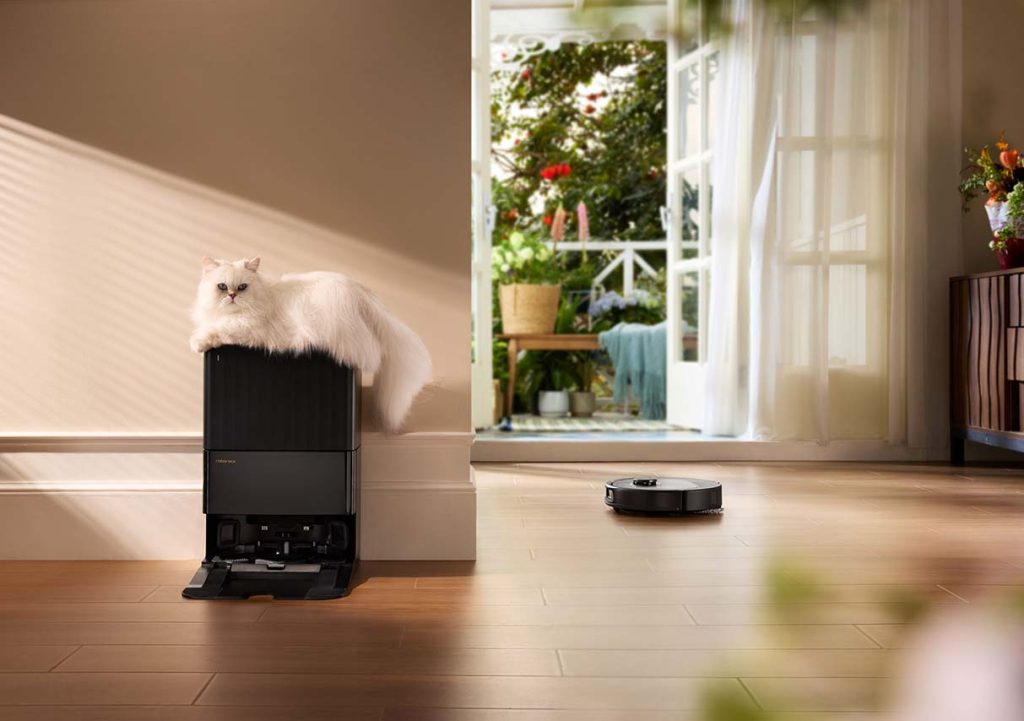
Unlike traditional vacuuming devices that rely on random, “bump-and-go” movement, this robot follows a highly systematic path. It prioritizes tracing the room’s perimeter before gradually working its way inward, ensuring complete coverage rather than relying on chance to cover the floor area.
The resulting user experience is noticeably different: efficiency improves significantly because the device avoids redundant passes over the same area, and the outcome becomes more predictable. You know exactly when a specific area will be finished and can confidently let the robot operate independently without constantly checking for missed spots.
In practice, this “structured cleaning” approach fosters a sense of trust, as the robot’s behavior is logical and understandable rather than erratic or uncontrolled. Over the long term, this reliability is more important than the results of any single cleaning session.
III. Obstacle Avoidance: Reducing Pre-Cleaning Preparation
For pet owners, the real hassle of cleaning isn’t the vacuuming or mopping itself, but the preparation required beforehand. Floors can be cluttered with power cords, pet toys, slippers, or other small, temporarily placed items. If you have to clear the floor every time before starting the device, the cleaning process itself becomes an added burden.
Roborock’s improved obstacle avoidance capabilities significantly alleviate this issue. It can identify and navigate around common obstacles during the cleaning process, rather than simply changing direction after a collision. The practical benefit is a reduced need for manual clearing; you no longer have to tidy up the entire room just to get the machine started.
IV. Integrated Vacuuming and Mopping: Tackling Complex Messes in Pet-Owning Households
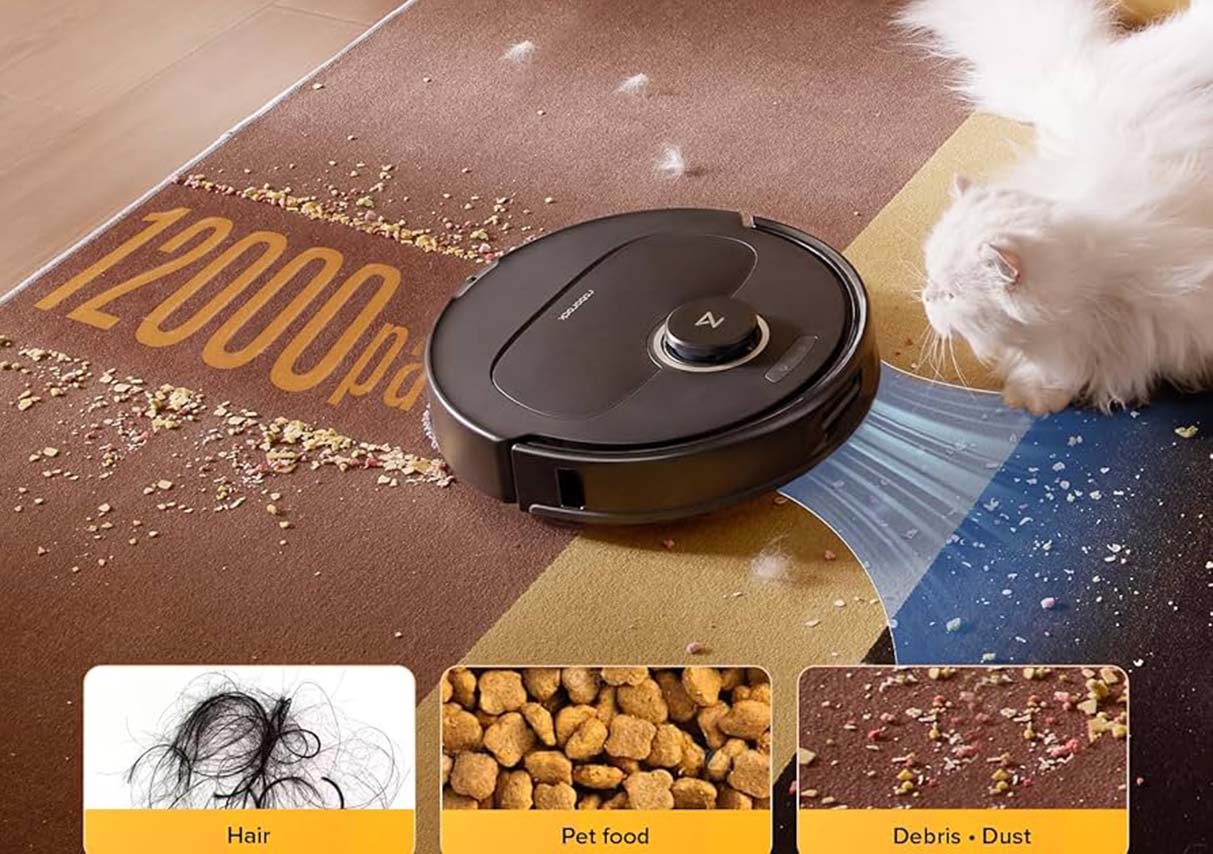
Floors in homes with pets rarely suffer from just one type of dirt; instead, they face a mix of contaminants—shed fur, light stains from paw prints, scattered cat litter, and everyday debris. Relying solely on manual cleaning to handle this “complex mess” is incredibly time-consuming and repetitive.
Roborock’s integrated vacuum-and-mop design shines in these scenarios. It doesn’t merely combine the two functions; it coordinates them within a single cleaning cycle. Vacuuming handles fur, particulates, and dust, while mopping tackles surface stains and paw prints, resulting in a more balanced and thorough clean.
V. Mapping and Zoned Cleaning: Putting You in Control
After using the device for a while, I’ve come to rely heavily on its map management features. It has transformed not just how I clean, but how I control the cleaning process.
Once Roborock completes its initial mapping, it presents a structured layout of your home, automatically dividing different rooms into distinct zones. The biggest advantage of this structured approach is the ability to tailor cleaning strategies to your actual needs, eliminating the need for a full-house clean every time.
For instance, in a home with pets, animals often frequent specific areas. You can choose to focus cleaning efforts on the living room or pet zones rather than repeatedly covering every room daily. This “on-demand cleaning” model offers greater flexibility and aligns better with the rhythm of real life.
Meanwhile, the scheduled cleaning function further reduces the effort required. Once set, the device operates automatically at designated times without manual intervention. The impact on the user experience is significant: cleaning shifts from an “active chore” to an “automated background activity,” so you no longer even have to ask yourself, “Should I sweep the floor today?”
VI. Auto-Recharge and Resume Cleaning: Ensuring a Complete Clean
In large homes or those with complex layouts, a common cleaning challenge is the inability to cover every area in a single pass—often due to battery limitations or navigation complexities.
Roborock’s auto-recharge and resume cleaning features play a crucial role in solving this problem. When the battery runs low, it automatically returns to the dock to recharge rather than simply aborting the task. Once charged, it resumes cleaning from the exact spot where it left off, instead of starting over from the beginning.
In practical use, the greatest benefit of this mechanism is “completeness.” You don’t have to worry about the device stopping mid-task or intervene manually to restart it; it automatically sees the entire job through to completion.
More importantly, this continuity enables true “unattended” operation. For pet owners or users who are frequently away from home, this means maintaining consistently clean floors without any extra effort or input.
VII. Changing the Cleaning Method, Not the Cleaning Capability
If one were to summarize the value of Roborock in a single sentence, it would be this: it doesn’t necessarily make cleaning more thorough, but it makes the process more automated.
For households with pets, the significance of this shift is straightforward: you no longer need to repeat the same chore every day, as the device maintains a baseline level of cleanliness for you.
For me, this experience of “reducing repetitive labor” is far more valuable than a mere improvement in cleaning performance.