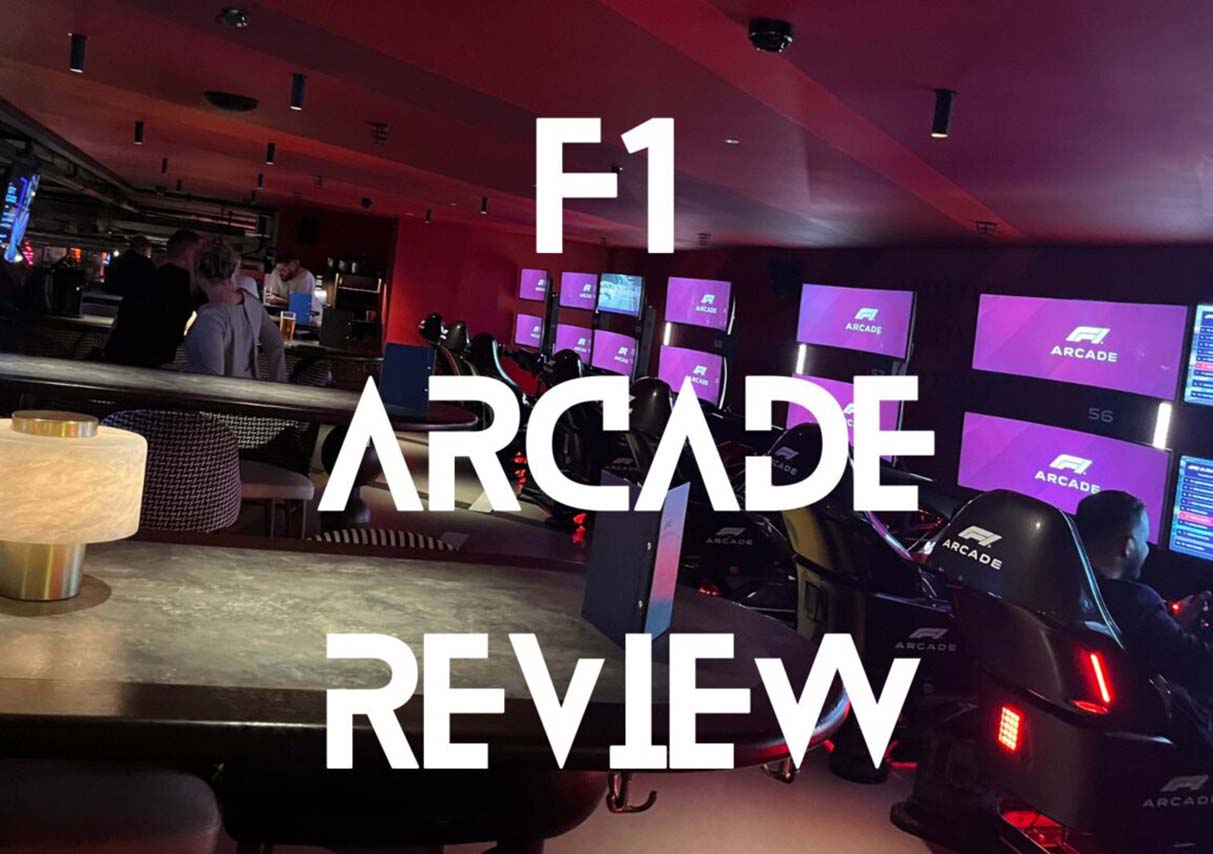
I have always dreamed of doing more than just watching races—I wanted to experience the tension and thrill of the racetrack firsthand. Traditionally, truly understanding F1’s cornering techniques, braking points, and overtaking strategies required extensive theoretical study and on-site observation—a process that is typically both expensive and time-consuming. It wasn’t until I discovered F1 Arcade that I truly grasped the possibility of “learning professional racing knowledge through gaming.”
Entering the Track: An Immersive Experience That Feels Real
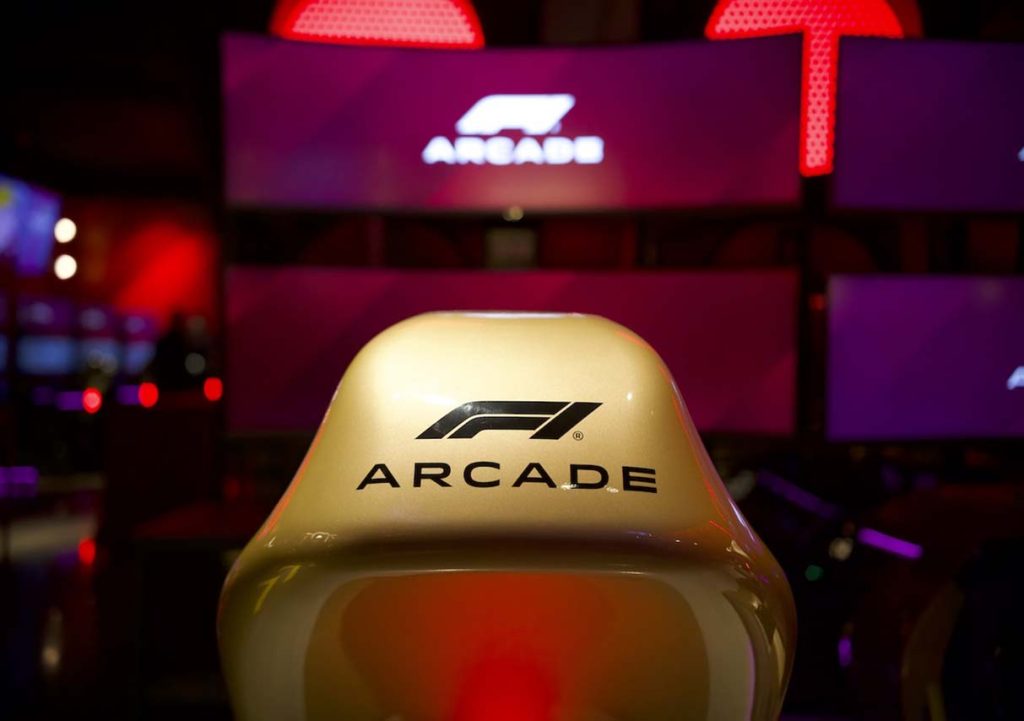
The first time I sat in a simulator cockpit at F1 Arcade, I was blown away by its realism. The seat, steering wheel, pedals—even the haptic feedback—almost perfectly replicated the sensation of driving a real racing car. As I gripped the steering wheel, I felt as though I had been transported directly onto the track; every corner and every burst of acceleration brought with it a palpable sense of pressure and intensity.
Before the race began, I noticed that the F1 Arcade interface provided a detailed track preview, complete with corner numbers, corner types, and braking reference points. For a beginner like me, this served as an incredibly useful educational tool: I could mentally map out my route in advance, understanding the optimal entry angles for corners and the precise points to accelerate on the exit, rather than simply blindly following the game’s pace.
Cornering Techniques: From Theory to Practice
In F1 racing, corners are the critical factor that determines victory or defeat. The very first technique I learned at F1 Arcade was the importance of the entry angle. In the game, every corner has an optimal entry line; if your entry angle is too wide or too tight, both your speed and your ability to control the car on the exit will be compromised.
During my first attempt at taking a corner at high speed, the vibrations in the steering wheel and the subtle drift of the car’s body served as cues, alerting me to the precise timing required for braking and turning. I continuously adjusted my entry angles until I finally discovered that ideal line—one that was both stable and fast. Through this process of trial and error, I gradually internalized the core principles of F1 driving: “brake early, maintain stability through the corner, and accelerate on the exit.”
Overtaking Strategies: A Blend of Observation and Timingv
Beyond the corners, the most exhilarating aspect of F1 racing is overtaking. At F1 Arcade, I experienced multi-car competitive simulations: I had to closely observe my opponents’ speeds, cornering lines, and braking points to identify the most opportune moments to overtake.
On one occasion, I caught up to the car ahead of me on a straight section of the track; however, if I accelerated too early in an attempt to pass, I would lose control of the vehicle entering the subsequent corner. The game interface displays metrics such as the distance between cars and acceleration cues, allowing me to use data to determine the optimal overtaking point. After numerous practice runs, I mastered a specific strategy: “wait patiently to accelerate on the straights, then strike from the outside line when exiting the corner”—a tactic that applies just as effectively on a real-world racetrack.
Through this interactive learning process, I found it much easier to grasp the tactical logic of F1 racing—and to visualize theoretical concepts—than I would have by simply watching races.
Braking Points and Control: Mastering Every Meter with Precision
Braking points are one of the most challenging aspects of F1 training to master. F1 Arcade provides reference braking markers, enabling me to constantly experiment with varying braking pressures and timings within the game. Whenever I braked too late, my car would spin out of control upon exiting the corner; conversely, whenever I braked too early, I would forfeit my acceleration advantage.
Gradually, I learned to decelerate with precision before entering a corner, make subtle steering adjustments mid-corner, and accelerate rapidly upon exit. The data feedback provided by the game allowed me to make continuous adjustments; every input I made was accompanied by immediate visual and force feedback. This immersive learning experience proved far more intuitive than reading textbooks or watching video tutorials, giving me a much deeper understanding of the underlying principles of racing physics.
Real-Time Data Analysis: Cultivating a “Track Sense”
Another highlight of F1 Arcade is the real-time data analysis it offers. After completing each simulated race, I can review metrics such as cornering speeds, braking distances, acceleration curves, and racing lines. By comparing the data from different attempts, I can clearly identify specific areas where I need to improve—whether in cornering technique, overtaking maneuvers, or acceleration efficiency.
For instance, I discovered that accelerating too slowly out of certain corners resulted in lost time, while on other straights, I could gain speed by shifting up earlier. Through this data-driven analysis, I gradually developed a keen “track sense,” making each subsequent practice session more precise and efficient.
From Game to Reality: The Power of Visualized Knowledge
What surprised and delighted me most was the realization that F1 Arcade is far more than just an entertainment tool; it serves as a powerful medium that transforms the complex intricacies of F1 racing into visual, easily digestible knowledge. I can directly apply the experience gained in the game to watching actual races: I can anticipate drivers’ corner-entry strategies, identify overtaking opportunities, and analyze braking techniques. What were once abstract racing tactics suddenly become tangible and accessible.
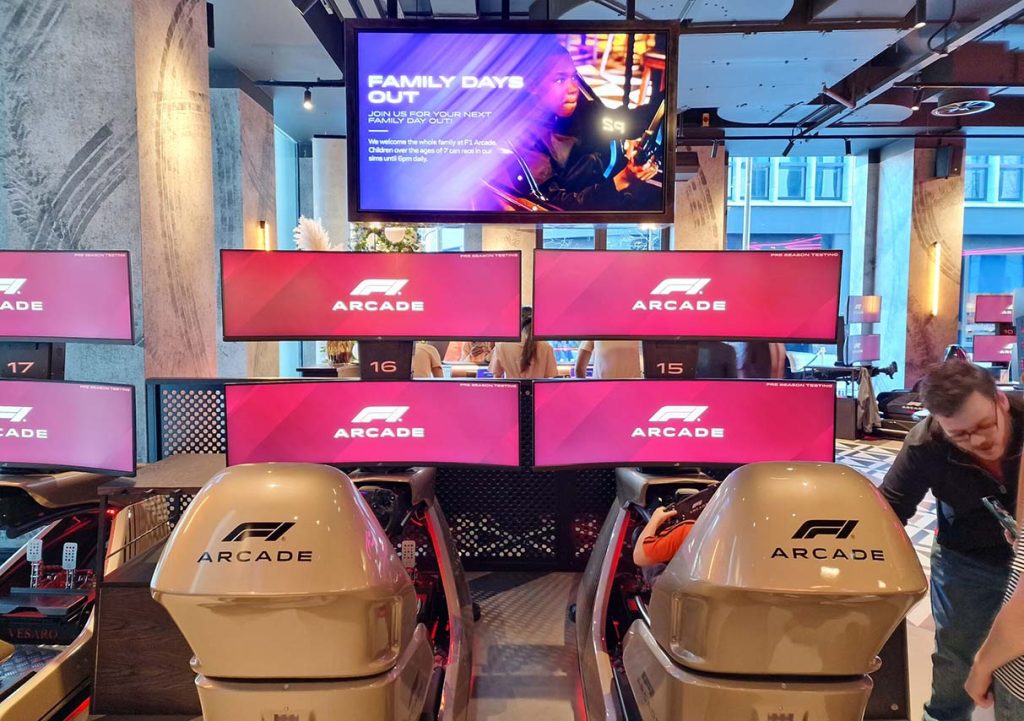
In this way, I not only enjoy the speed and thrills within the game but also—almost subconsciously—acquire professional F1 racing skills—an experience that traditional spectating simply cannot provide.
F1 Arcade: Making Racing Knowledge Accessible
Through the simulator experience at F1 Arcade, I gained a profound understanding of the importance of F1 cornering techniques, overtaking strategies, and braking points. With my hands on the steering wheel, every acceleration, brake, and turn presented a challenge, yet simultaneously offered an opportunity to learn genuine racing tactics.
Whether you are a seasoned racing enthusiast or a newcomer looking to explore the world of F1, F1 Arcade allows you to master professional knowledge through an immersive experience. It offers more than just speed and excitement; it bridges the gap between racing theory and practice, transforming every gaming session into a learning opportunity.